
Screw Conveyors
Screw conveyors are continuously operating transport mechanisms used to efficiently move semi-solid materials.
These conveyors transport dewatered sludge and the various types of debris collected from screens in sewers. Our partners provide many types of screw conveyor for many applications, and Archer Separation designs the conveying system around your centrifuge, screw press or dewatering plant so the cake goes where it needs to, every time.

Part of the dewatering system
A dewatering machine is only as reliable as the equipment that carries its cake away. We size the conveyors for the full design cake output of the machines they serve, and supply them together with the centrifuge or press, the chutes and gates, and the controls.
- Cake collection under centrifuges and screw presses
- Inclined conveyors up to the truck or bin
- Reversible distribution conveyors with several discharge spouts
- Conveyors for containerized centrifuge systems
How a screw conveyor works
A screw conveyor is a volumetric device for moving bulk material: with each turn of the screw, a fixed volume of material is carried from the inlet hopper to the discharge spout. Because of this, a screw conveyor is always fed at a controlled rate by the machine or conveyor upstream, never flooded. Reversing the gearmotor on a conveyor with spouts at both ends changes the direction of travel, so one conveyor can fill two bins or trucks in turn.
Shaftless screw conveyors
The spiral has no centre pipe. It is made from high-strength steel, stiff enough to carry the drive torque, and lies in the bottom of the trough on a wear liner. The drive is connected directly to the spiral at the discharge end, so there is no bearing at the far end and the spiral is the only moving part in contact with the material. Shaftless designs suit sticky sludge cake, screenings and stringy material that would wrap around a shaft.
Shafted screw conveyors
A conventional flighted screw on a centre pipe, supported by bearings at both ends. Shafted screws are typically used for free-flowing, granular or powdery material, and where a short, simple conveyor is all that is needed.
Typical construction
| Spiral | Shaftless high-strength steel spiral, or shafted screw; stainless steel where required |
|---|---|
| Trough | U-shaped, AISI 304 or AISI 316 stainless steel |
| Liner | UHMW polyethylene wear liner (for example 12 mm) for shaftless spirals |
| Covers | Bolted stainless steel covers for easy access and maintenance |
| Inclination | Horizontal up to about 30°; inclined units use a reinforced spiral |
| Size | Typically 150 to 500 mm diameter and up to 20–30 m long per conveyor |
| Drive | Gearmotor at the discharge end; reversible on distribution conveyors |
| Safety and monitoring | Zero-speed sensor, emergency pull-cord stop along the conveyor, flush water connection |
| Electrical | To suit the site supply, for example 600 V or 480 V, 3-phase, 60 Hz |
Typical values from Archer conveyor proposals and our partners' literature. Every conveyor is sized to its own duty: cake volume, solids content, length and lift.
Gates, chutes and cake pumps
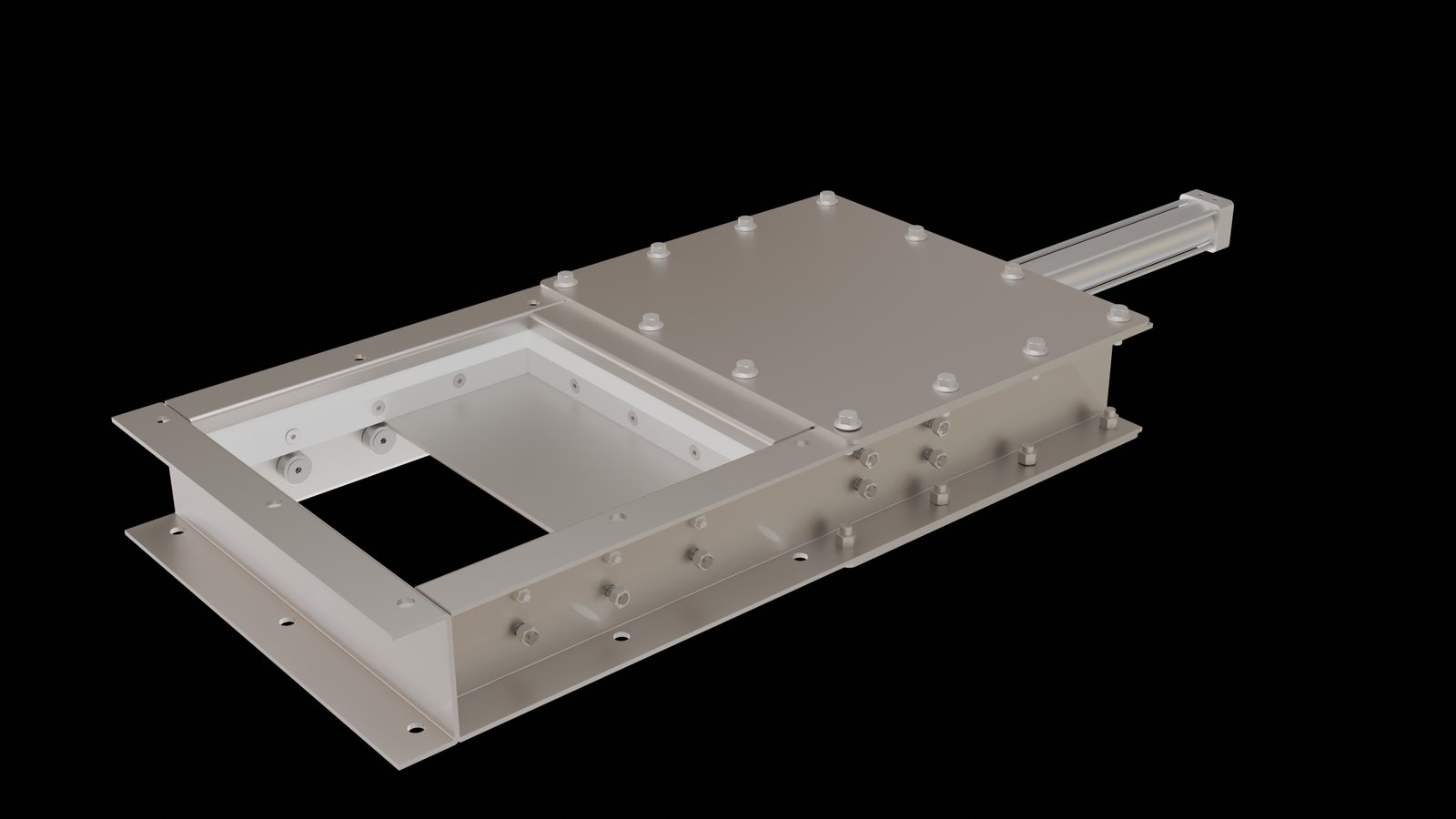
Slide gates on the cake chute
A pneumatic or electric slide gate in the chute between the dewatering machine and the conveyor lets operators divert the cake or close the chute for maintenance. We design the gates and chutes with the conveyor so the whole cake path is sealed and easy to clean.
When a pump beats a conveyor
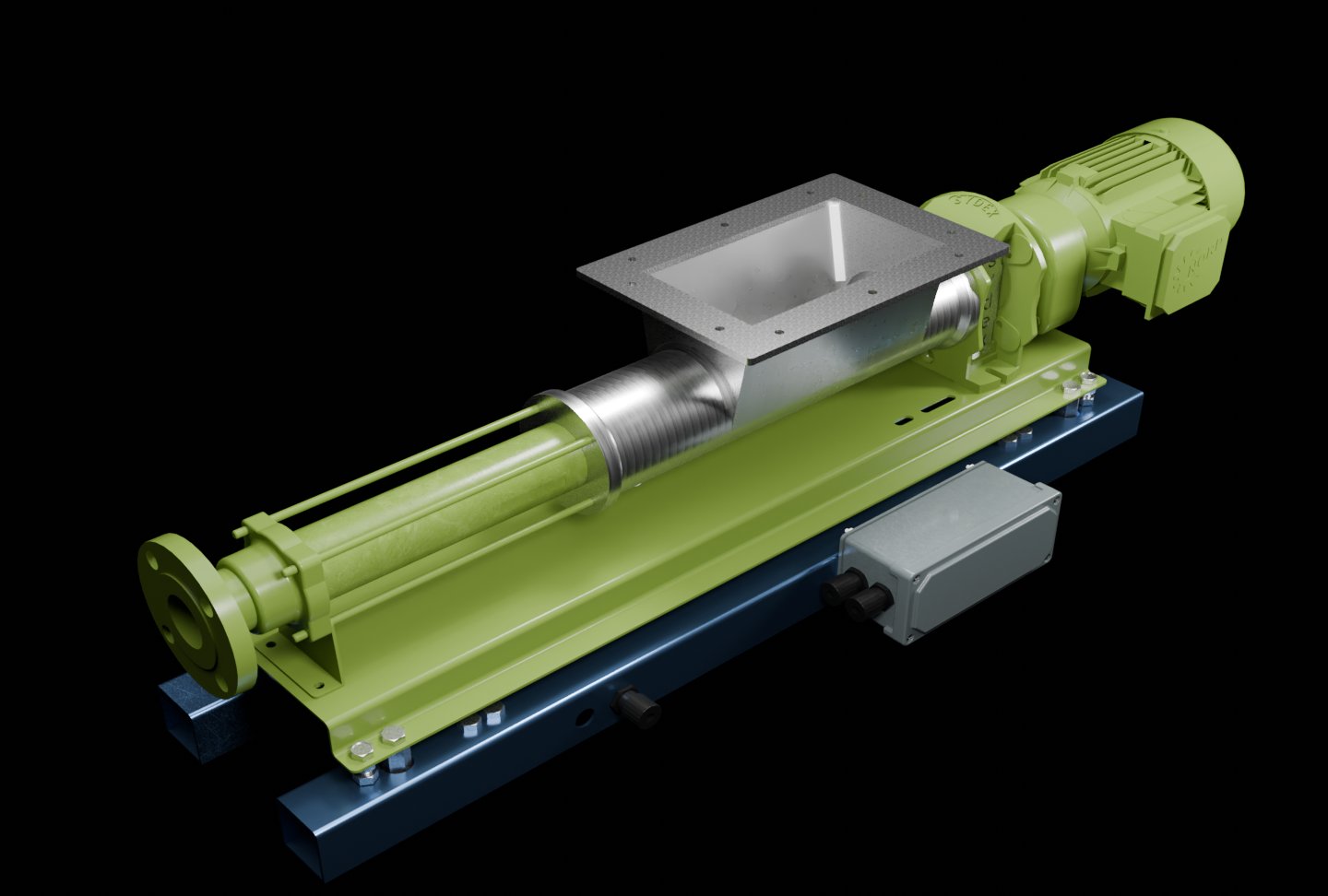
Where cake must travel a long way, climb high or pass through walls, a hopper-fed progressing cavity cake pump can replace the conveyor or take over from it, moving the cake in a closed pipe. Archer supplies Sydex progressing cavity pumps for this duty.
Applications
Interlocked with your dewatering controls
Conveyors are wired into the same control panel as the machine they serve. Typically the conveyor must be running before the centrifuge or press is fed, and a zero-speed alarm stops the feed before cake can pile up in the chute. With remote monitoring, our engineers can see conveyor status alongside the rest of the plant.
Related pages
HAUS Centrifuge Technologies
Centrifuges, screw presses and shafted and shaftless conveyors.
ESMIL Group
Screw conveyors and screw presses for dewatered material.
Sydex Pump
Progressing cavity pumps, grinders and macerators.
Decanter Centrifuges
Continuous sludge dewatering.
Multi-Disc Screw Press Dehydrators
Low-energy dewatering for organic sludge.
Sludge Dewatering
Choosing the right dewatering technology.