
Potassium Permanganate (KMnO4) Dry Feed and Dosing System
A complete dry-feed system that turns drummed potassium permanganate into an exact-strength solution, without operators handling the powder.
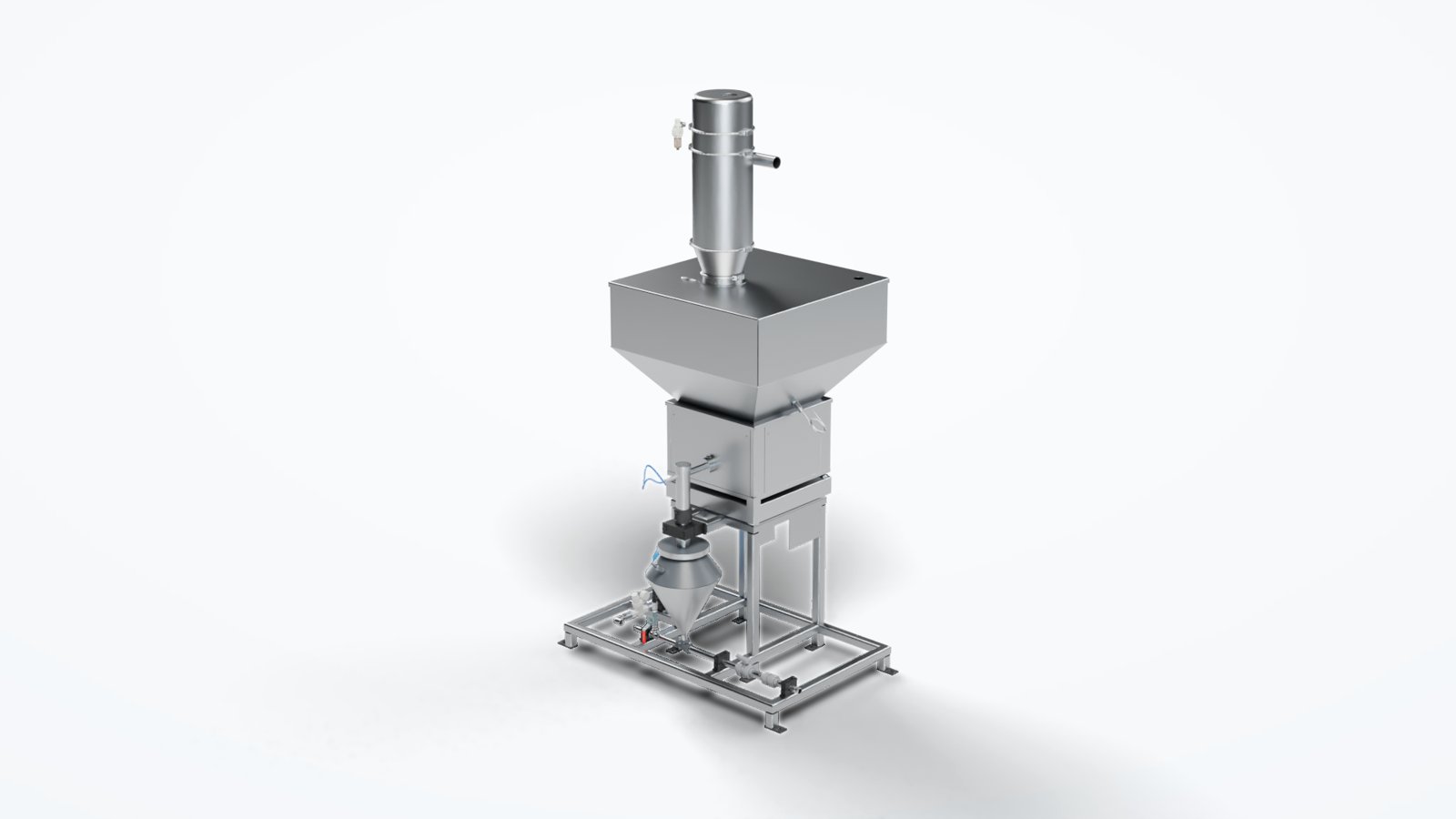
Archer Separation designs and builds automatic potassium permanganate (KMnO4) make-down and dosing systems for water treatment. Powder is vacuum-loaded straight from the drum, metered by a screw feeder on load cells, wetted in a cone and eductor, and mixed into batches of 1–6 % solution in tanks that feed the plant dosing point. One of these systems was supplied to a municipal water treatment plant in British Columbia.
Why potassium permanganate
What it does in the plant
Potassium permanganate is a strong oxidant. Water treatment plants typically dose it ahead of clarification to oxidize dissolved iron and manganese into particles that can be settled out, and to control taste and odour compounds. It is a purple, free-flowing crystalline powder that is supplied in drums and dissolved on site.
Why it is hard to handle
- An oxidizer: it must be kept away from organic and other easily oxidized materials, acids and peroxides
- The dust irritates eyes and mucous membranes, so open handling calls for respirators and eye protection
- The powder takes up moisture and cakes in humid air, which blocks feeders and upsets the dose
- Undispersed crystals form lumps that dissolve slowly and leave the solution off strength
The system is built around those problems: the powder travels in closed equipment from the drum to the water, the feed point is kept warm and sealed when it stops, and every crystal is wetted at high shear before it reaches the tank.
How the system works
Vacuum loading
A stainless vacuum loader draws about 30 kg of powder per cycle from the drum and drops it into the hopper. It refills on the hopper low-level signal and stops when the hopper is full.
Storage hopper
A 500 L stainless hopper with a clamped cover and a vented dust sock holds the powder above the feeder.
Metering
A volumetric screw feeder with an agitated chute meters the powder. The feeder and hopper sit on a four-load-cell scale, so the system knows how much powder is left before it starts a batch.
Dry feed point
A small heater keeps the feeder barrel warm against condensation, and a pneumatic plunger closes the discharge whenever the feeder stops.
Wetting
Powder falls into a wetting cone, where a tangential wash-water vortex keeps the walls clean and a level switch guards against overflow.
Eductor
Motive water through a stainless eductor pulls the powder in and disperses it at high shear (G values of about 10,000–12,000 /s), so no lumps form.
Batch mixing
The solution fills one of three mixing tanks, each with its own mixer and level transmitter. Gentle mixing in the tank completes the dissolution.
Dosing
A finished tank is released to the plant dosing pump while the next one is made up, so solution is always available.
Generic flowsheet for illustration. Every Archer system is designed to its own basis; ask us for one drawn for your plant.
The equipment
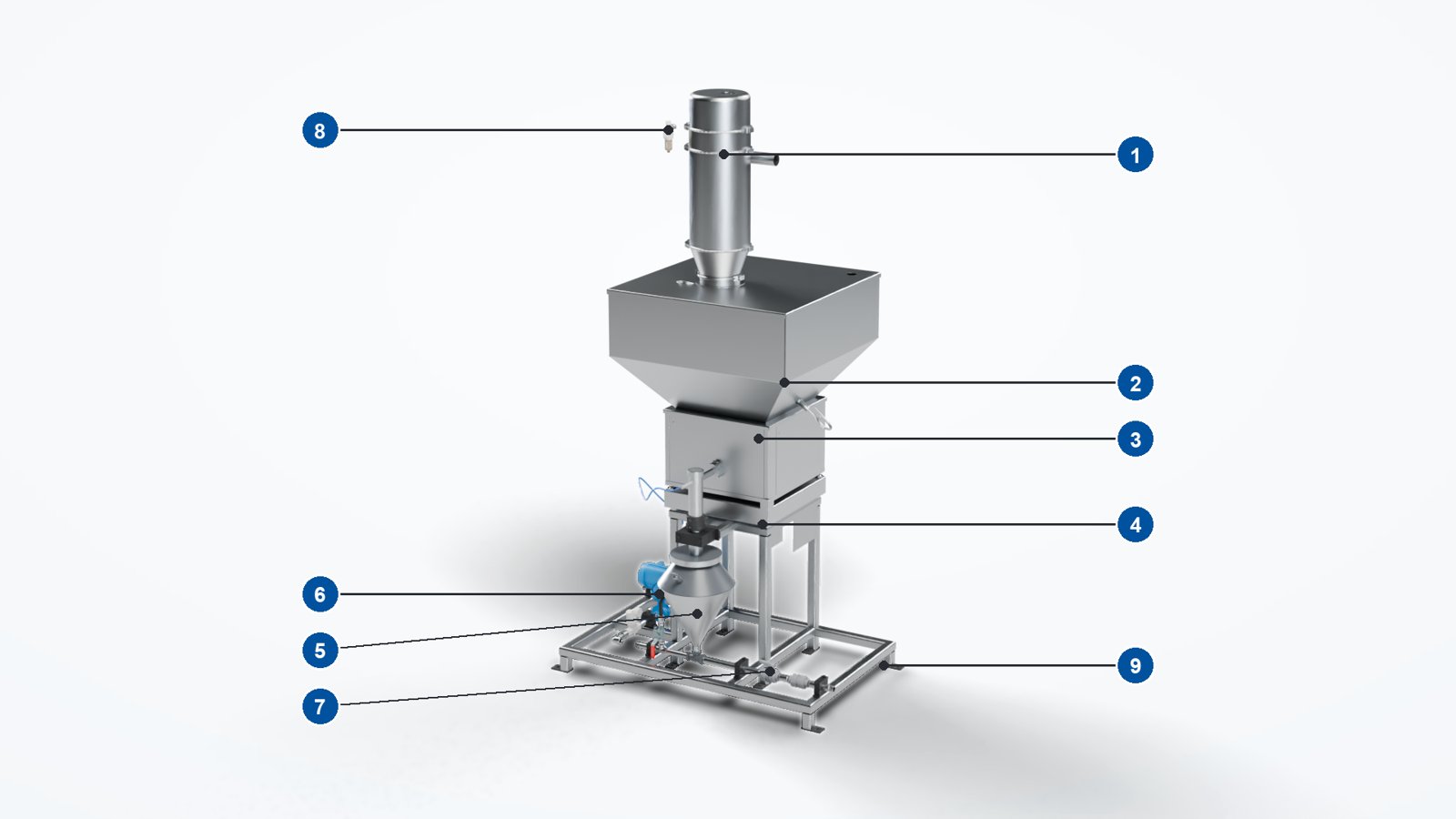
- Vacuum conveyor (powder loader)
- Stainless steel storage hopper
- Volumetric screw feeder
- Load cell weigh frame
- Wetting / dissolving cone
- Electromagnetic flowmeter (dilution water)
- Isolation ball valves
- Compressed-air filter regulator
- Stainless steel skid frame
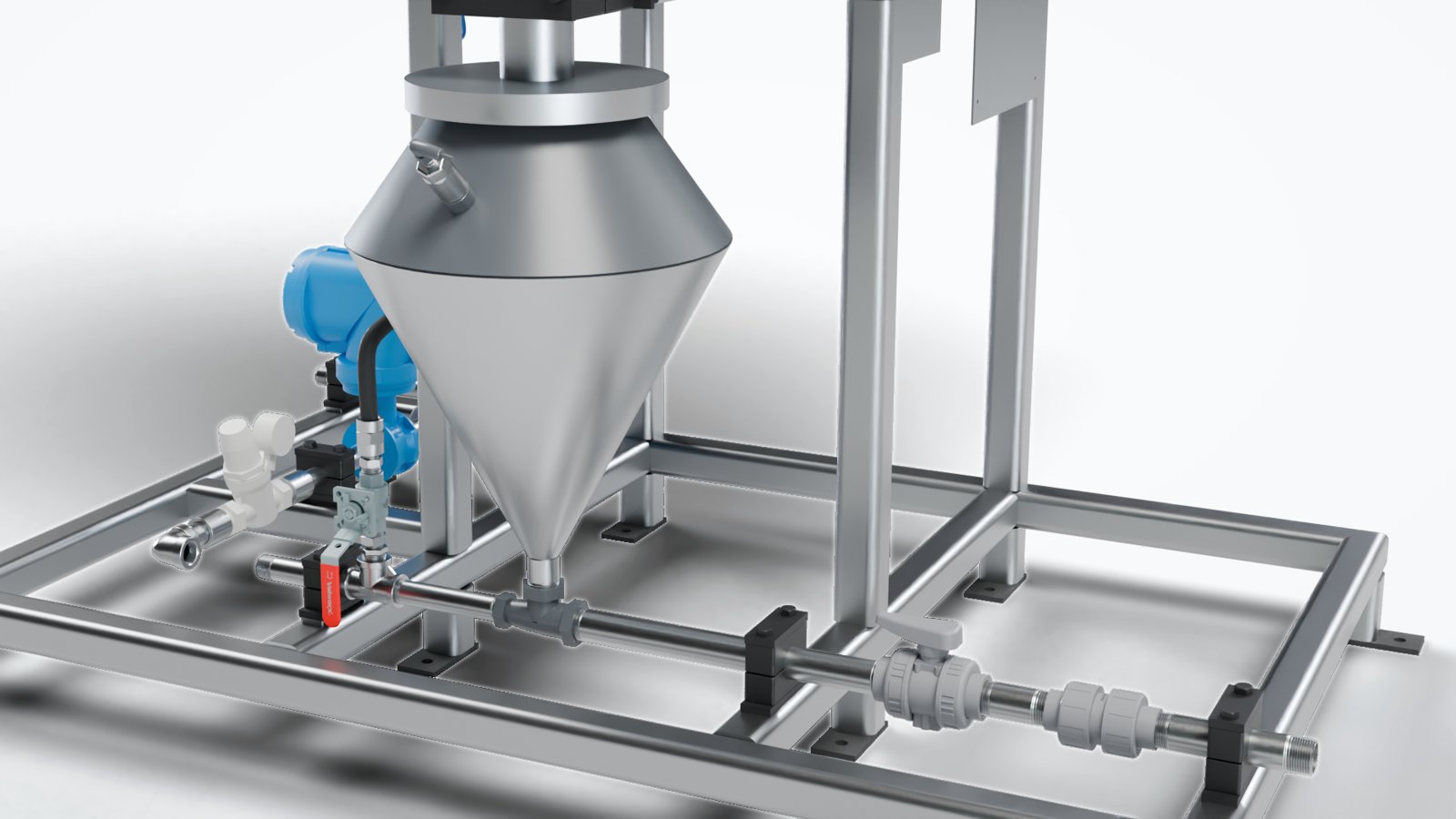
Wetting cone and water train
Automatic water valve, flowmeter and wash-water line feed the cone and eductor.
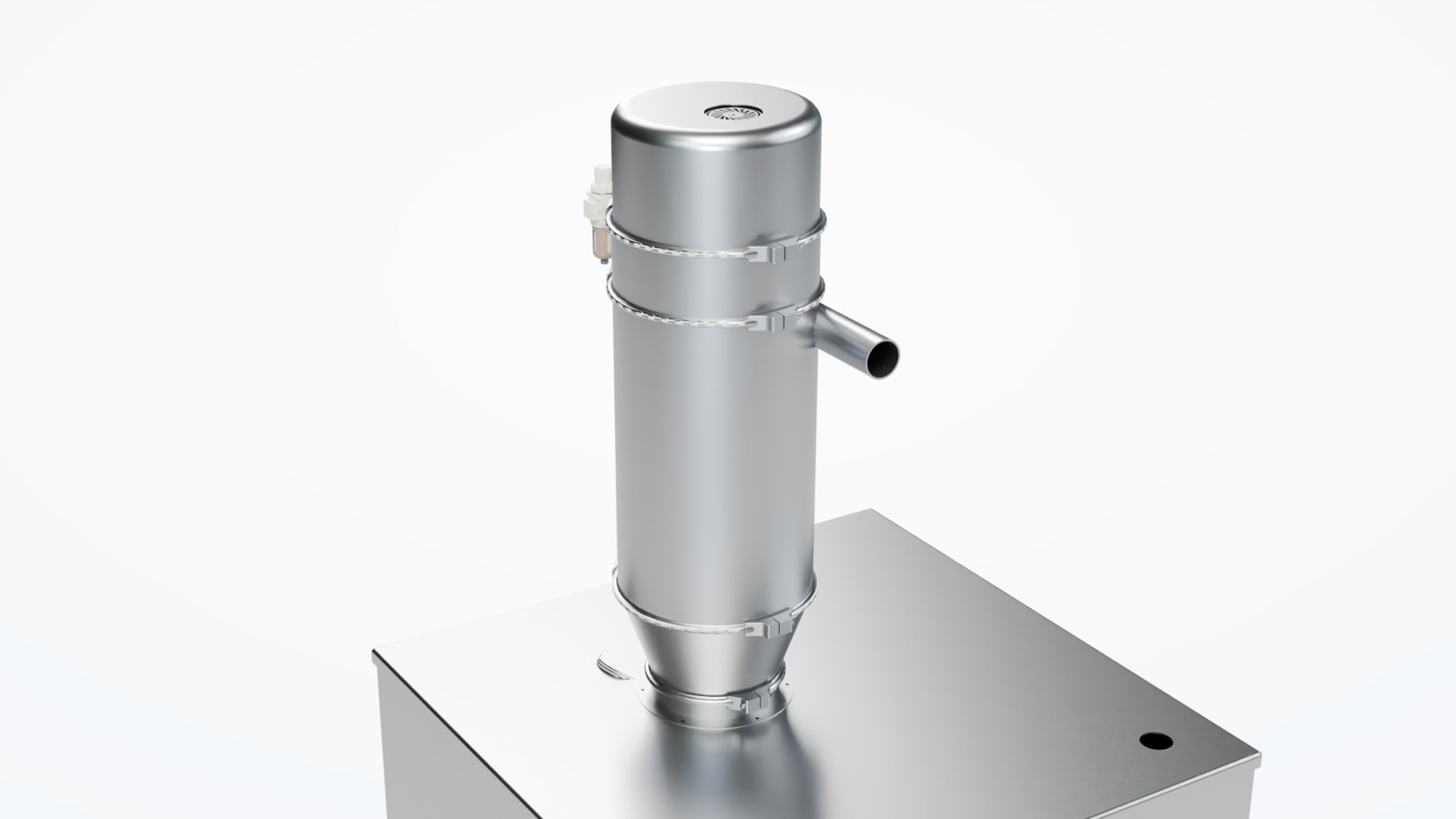
Vacuum loader
All-316 stainless loader on the hopper cover: no scooping or bag tipping at the hopper.
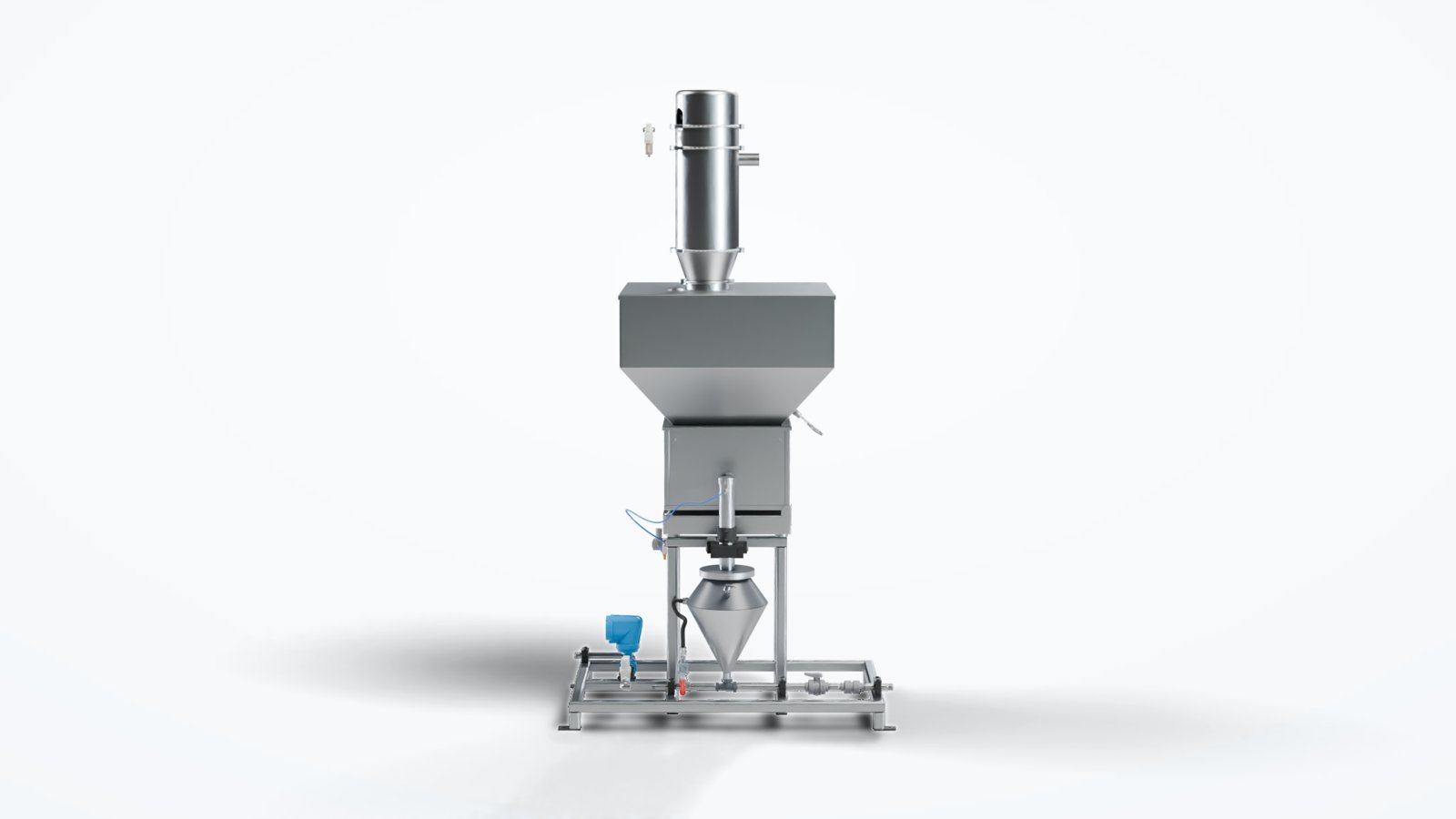
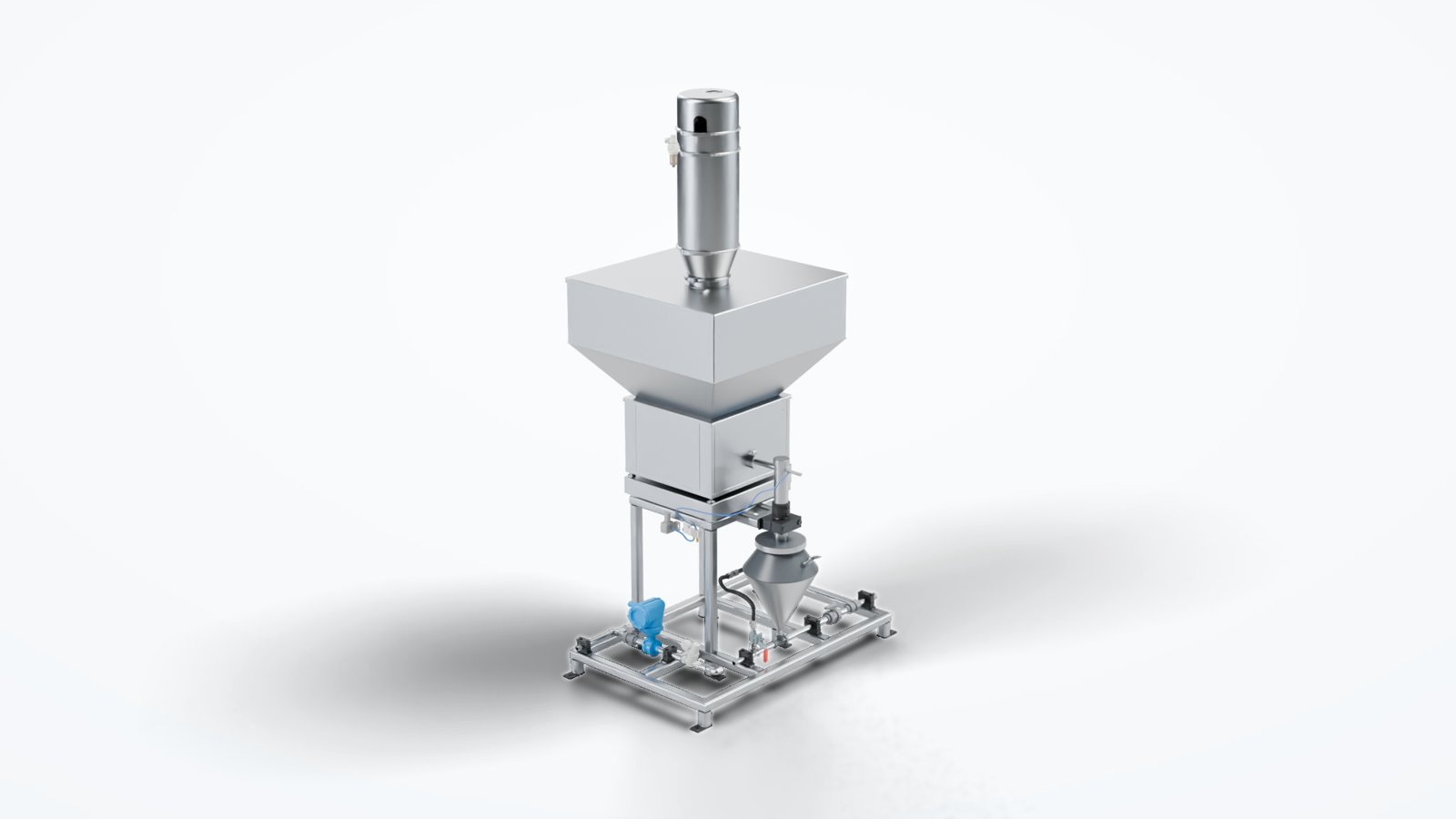
Front view
Hopper, feeder and cone on one stainless frame.
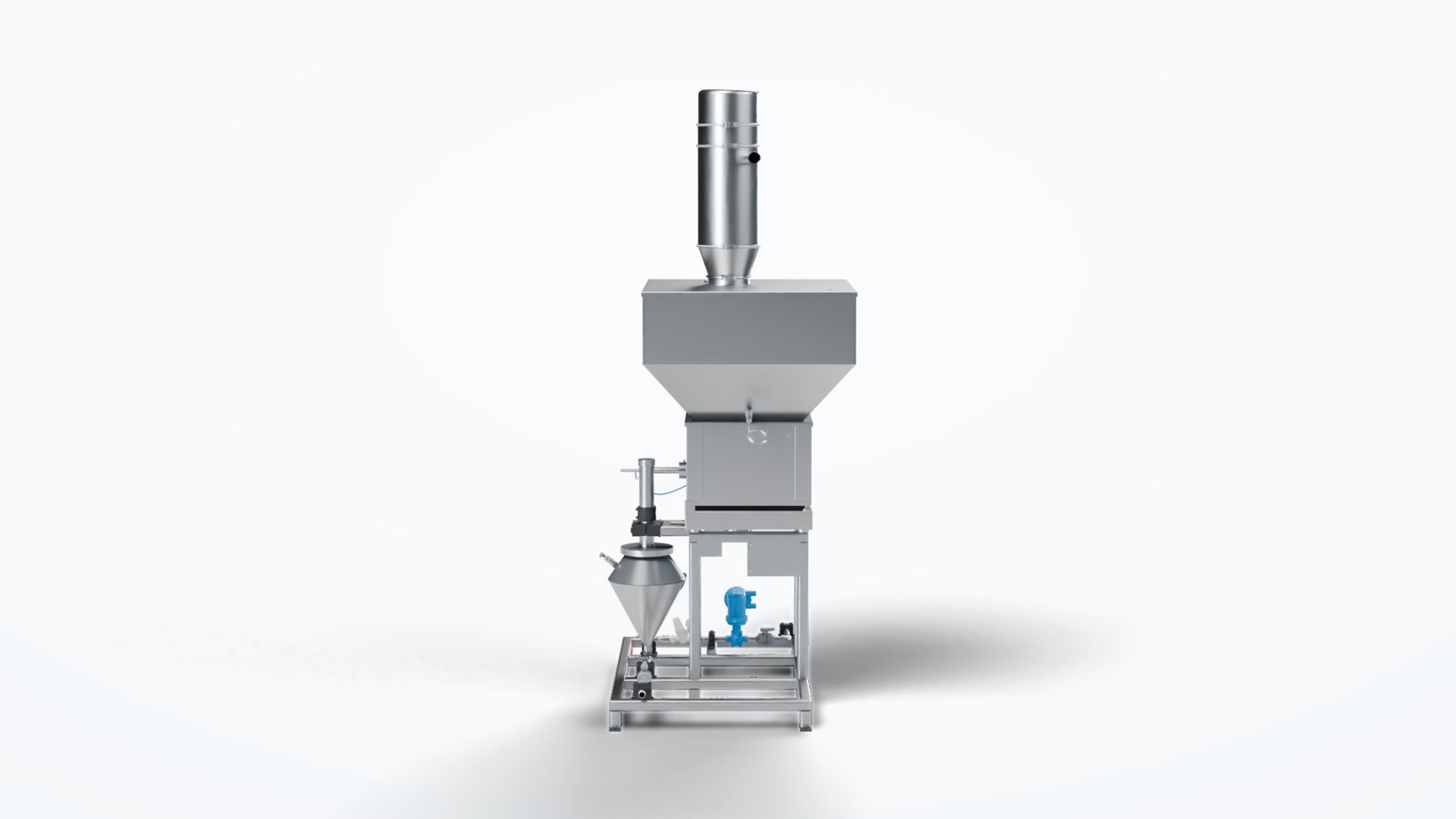
Opposite side
Access to the feeder side panels and the scale junction box.
Design basis
| Product | Potassium permanganate solution, 1–6 % w/w, made in batches |
|---|---|
| Powder | Free-flowing crystalline KMnO4, bulk density about 1,600 kg/m³, from drums |
| Vacuum loader | Up to 500 kg/h at 1,600 kg/m³; about 30 kg per loading cycle |
| Powder hopper | 500 L, 304 stainless steel |
| Screw feeder | Volumetric, VFD driven, rated up to 390 L/h of powder |
| Motive water | About 45 L/min at 50 psig to the eductor; back-pressure up to 10 psig |
| Mixing tanks | 3 × 2,727 L HDPE (NSF/ANSI 61), each with a top-entry mixer |
| Batch time | One batch within an hour; two 2,000 L batches within two hours |
| Liquid option | 40 % sodium permanganate diluted to 1–5 % |
Figures from the equipment submittal and P&IDs of the system supplied in British Columbia. Every system is sized to its own plant.
Materials
- Hopper, hopper cover, feeder frame, scale and skid frame in 304 stainless steel
- Vacuum loader in 316 stainless steel; eductor and its wetted parts in 316 stainless steel
- Schedule 80 PVC solution piping from the eductor to the tanks
- HDPE mixing tanks certified to NSF/ANSI 61, designed to the intent of ASTM D1998
- Tank mixers with 316 stainless steel shafts and pitched-blade impellers
Controls and instrumentation
The system runs from its own NEMA 4X stainless control panel with a PLC and a 10-inch touchscreen. In Auto, the operator picks the active tanks and the target strength; the system then makes a batch whenever an active tank reaches its low level, and the operator can trigger a fill at any time. Hand mode gives direct control of every valve, mixer and feeder.
Concentration is controlled, not assumed: the PLC totalizes the water and the powder it feeds and adjusts the feeder speed through the batch, using the feeder calibration made at commissioning.
- Load cell scale under the feeder and hopper, plus a hopper low-level switch
- Level switch in the wetting cone to stop the system before it overflows
- Flowmeter on the dilution water; no-flow alarm when the valve is open
- Radar level transmitter on each mixing tank, with high-high float switches as backup
- Motorized inlet and outlet valves on every tank
- E-stops on the hopper frame and on the panel
- Hard-wired run permissive, system available and system warning signals, plus Modbus TCP to the plant control system
Engineering
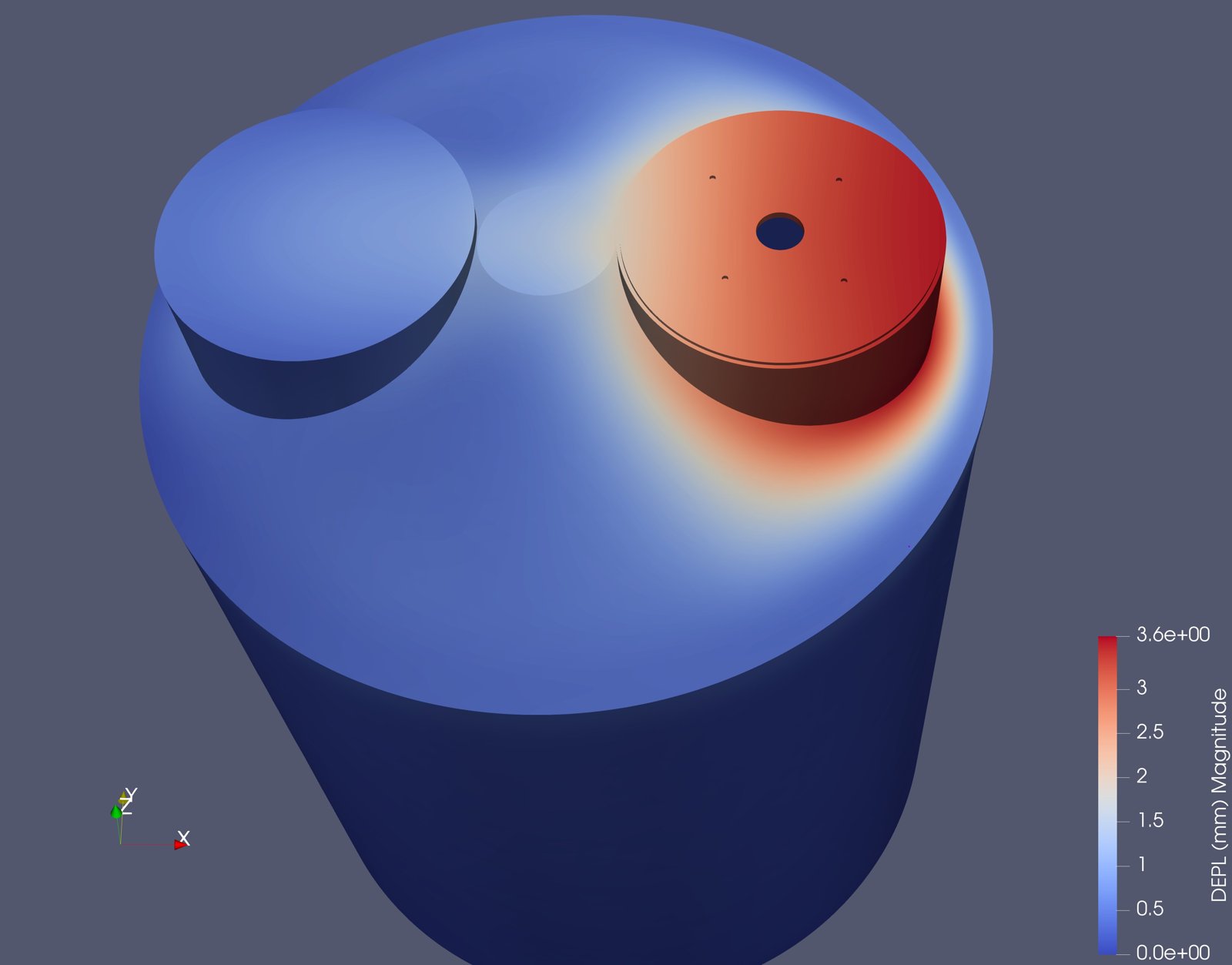
- Static finite element analysis of the stainless skid frame under the loaded hopper and feeder
- Finite element check of the tank lid where the top-entry mixer is mounted
- Tank wall check to ASTM D1998 for upright polyethylene tanks
- Thermal check of the feeder barrel heater against condensation
- Complete 3D model of the skid, tanks and piping before fabrication
Options
Sodium permanganate
Liquid 40 % NaMnO4 can be dosed into the same wetting cone by a metering pump, with a flowmeter and closed-loop control holding a 1–5 % solution. The system never mixes the two chemicals in one batch.
Feeder barrel heater
A low-power heating coil keeps the feeder barrel at about 45–50 °C, lowering the local humidity so the powder does not cake.
Tank configuration
Any tank can be set to standby for service while the others keep making solution. Tank number and size follow your demand.
Reference
A KMnO4 dry feed and dosing system of this design was supplied to a municipal water treatment plant in British Columbia, with the control panel, instruments, tanks and mixers, drawings, manuals and commissioning support.
Related pages
Chemical Systems
Dosing skids and make-down systems for coagulants, oxidants, acids and bases.
Polymer Systems
Dry and emulsion polymer make-down using the same wetting principle.
Skid Systems
Pre-assembled skids that arrive ready to connect.
Control Panels
PLC and HMI control panels with Archer’s own programming.
Remote Monitoring
Our engineers watch dosing and equipment from the office.
JarLab
Jar tests and lab results in one record, to set the right dose.
Planning a permanganate system, or replacing manual batching? Send us your dose range and water quality and we will size the feeder, eductor and tanks for your plant.