
Vancouver Island Fish Plant: Wastewater Treatment Case Study
A complete wastewater treatment system helps a fish processor on Vancouver Island meet its updated provincial permit.
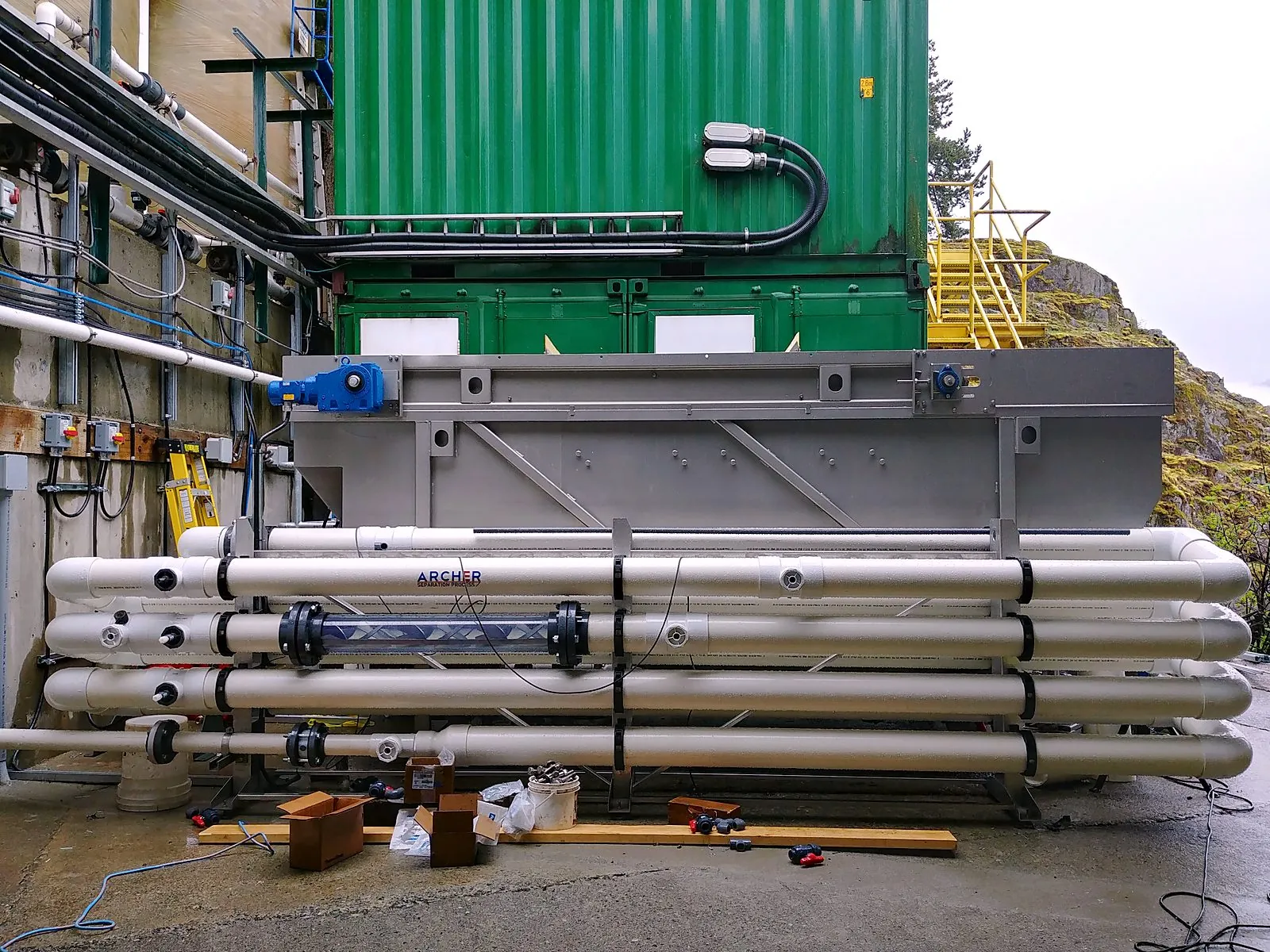
The application
The client is a federally licensed, provincially permitted fish processing plant on Vancouver Island, BC. In 2017 the BC Ministry of Environment and Climate Change reviewed the wastewater treatment permits of the fish processing sector.
To comply with its updated wastewater treatment permit, the company asked us to provide a full water treatment system for the plant. Its process water, known as blood water, carries suspended solids, BOD and bacteria, and the treated effluent goes to the ocean.
The challenge
The plant set out to do more than meet its draft permit. The treatment had to disinfect, reduce BOD, avoid disinfection by-products, meet the provincial guidelines for suspended solids in the receiving water, minimise contaminated solid waste and stay simple to operate.
The site was tight on space and power, and the process had to suit plant staff. UV was ruled out because the wastewater is too turbid; chlorination was kept only as a backup because it can form by-products and does not reduce BOD. The plant chose hydrogen peroxide advanced oxidation, which Archer took from laboratory and pilot testing to a full-scale system.
What Archer supplied
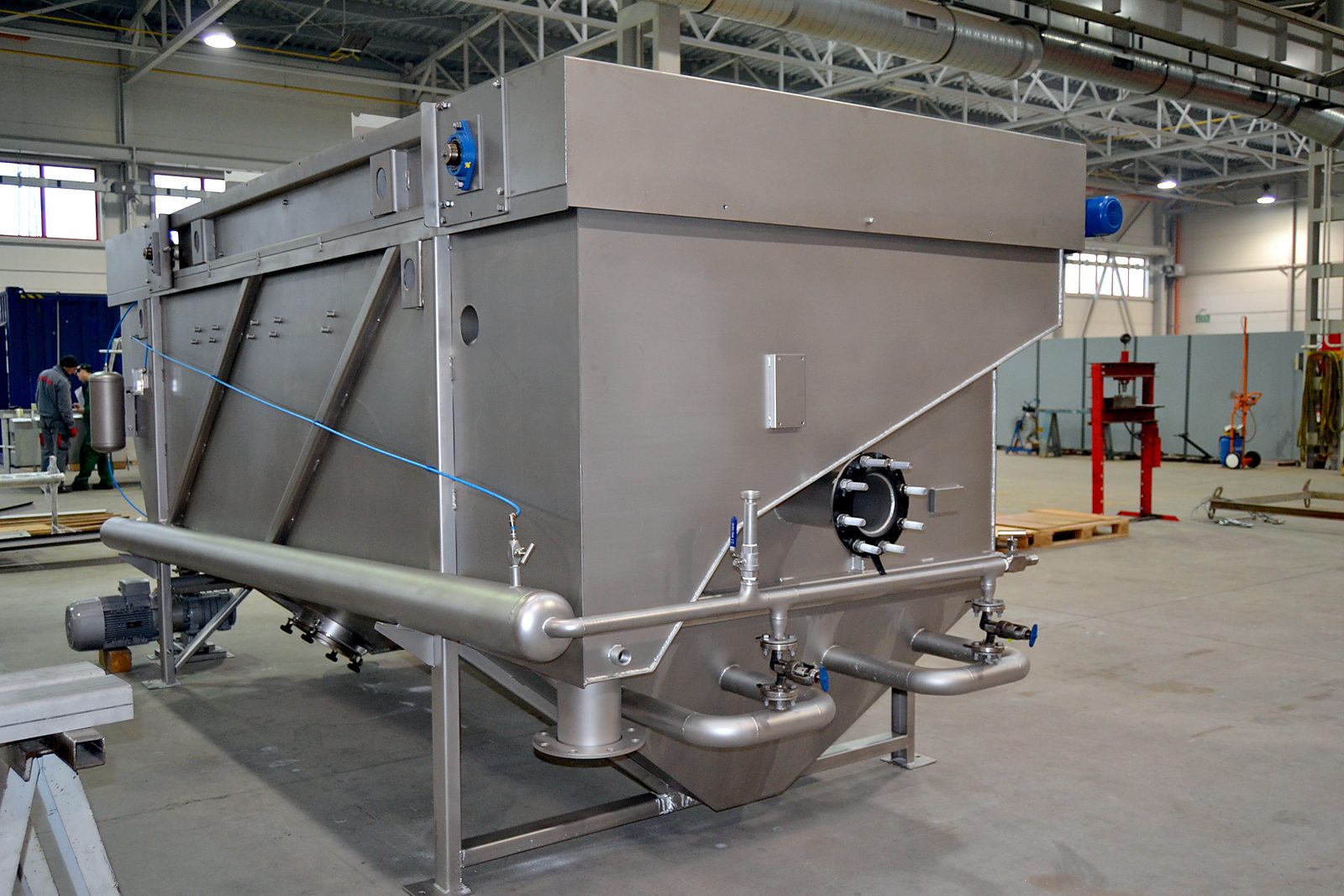
- Ekoton FT-20Z dissolved air flotation (DAF) unit and 150KF pipe flocculator
- Fluidized bed reactor (FBR) for advanced oxidation, designed in house and skid-mounted
- Reactor feed and recycle pumps
- Chemical dosing skids for peroxide and the DAF treatment chemicals
- pH, ORP and TSS instruments and flow meters
- Control panel with embedded PC, HMI and remote access
- Commissioning, data logging and ongoing service
How it works
Screened process water circulates several times between a recirculation tank and the fluidized bed reactor. Peroxide is injected into the reactor, where a fluidized bed of iron catalyst and glass beads generates hydroxyl radicals that oxidise the organics and kill bacteria. In operation the reactor runs at around pH 4.
The oxidised water then passes through the pipe flocculator, where static mixers blend in pH adjustment, coagulant and polymer, and on to the DAF, which runs at around pH 8. An EDUR recycle pump creates the micro-bubbles without a compressor. Lamella plates aid clarification; scrapers remove floated solids from the surface and heavy solids from the bottom.
An embedded PC controls the pumps, sensors and dosing from an HMI with setpoints and live trends. Remote I/O on EtherNet/IP cuts field cabling, and VPN access lets Archer engineers tune the process remotely. Archer sends the plant monthly reports of flows, pH, temperature and peroxide dose from the logged data.
Results
In pilot trials, bacteria fell to undetectable levels in every trial within 15 minutes of contact time. BOD fell 50–80% in 30 minutes without separation, and to undetectable levels with separation. Oxidation precipitates part of the BOD, raising TSS by 10–20%, and polymer alone separates these solids.
The full-scale system has been in service since 2019. In 2020 Archer added a HAUS DDE 2342 decanter centrifuge with Sydex pumps to dewater the plant’s thickened sludge, sized for 2.5 m³/h at 2% solids.
Equipment
| DAF unit | Ekoton FT-20Z with lamella plates, AISI 316 stainless steel tank and scrapers |
|---|---|
| DAF design flow | 25 m³/h average, 50 m³/h peak; influent TSS 400–1,000 mg/L |
| Flocculator | Ekoton 150KF, Sch 80 PVC with static mixers and injection points for coagulant, pH adjustment and polymer |
| Reactor | Archer fluidized bed reactor, AISI 316 stainless steel, skid-mounted, iron catalyst and glass bead bed |
| Reactor pumps | SR Pumps stainless steel centrifugal feed and recycle pumps |
| Controls | Beckhoff embedded PC and HMI, remote I/O, VPN remote access, data logging |
| Sludge dewatering (2020) | HAUS DDE 2342 decanter centrifuge with Sydex pumps |
Related: DAF Systems · Food Processing · All case studies