
California Olive Mill: OlivePlus 64 Processing Line Case Study
A complete HAUS OlivePlus 64 olive oil processing line for one of the largest mills in the USA.
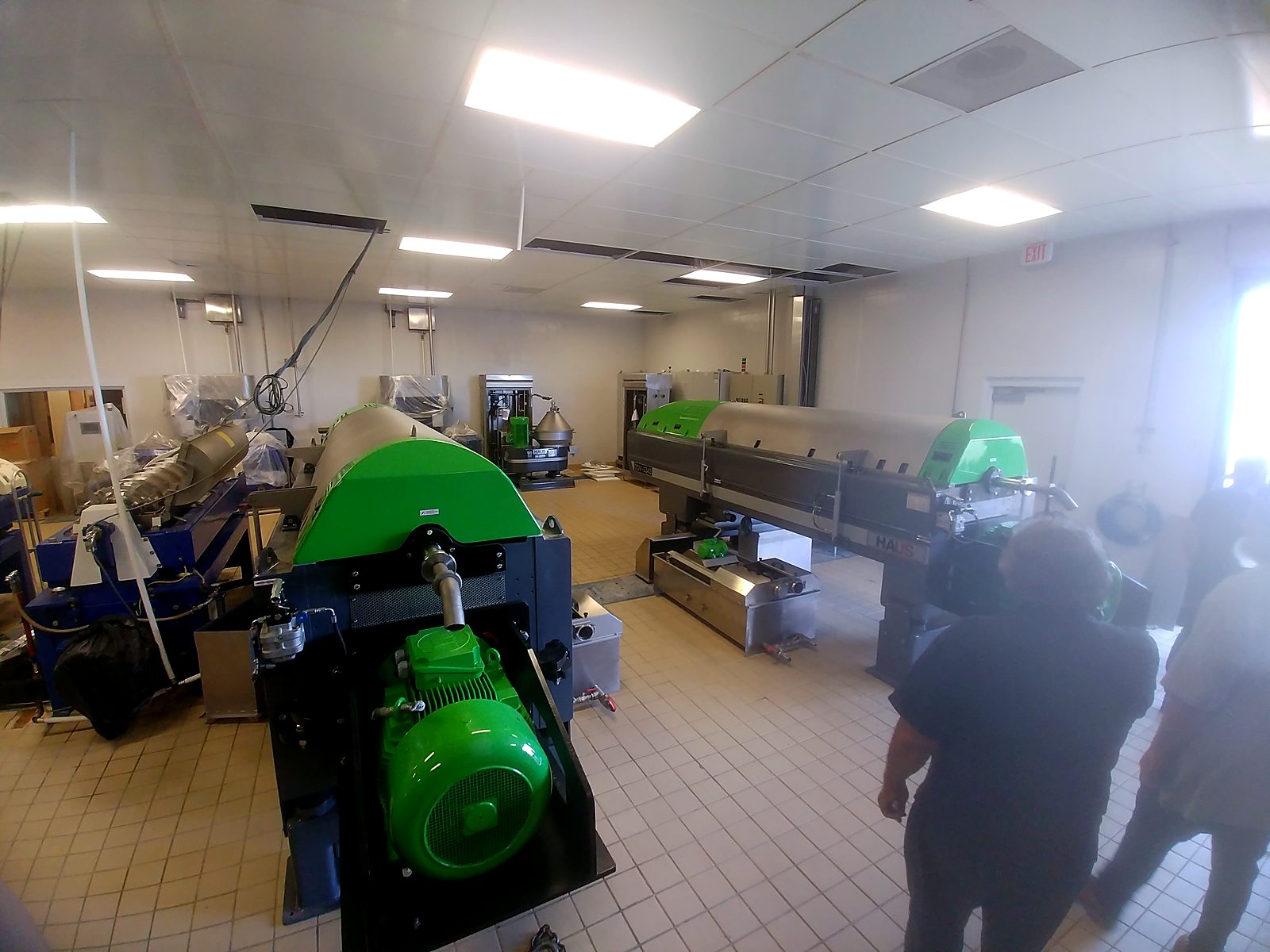
The application
The client is an organic and kosher-certified olive processing facility in California’s Central Valley, and one of the largest processing mills in the USA. It has a 200-acre high-density olive orchard and also processes olives for surrounding mills during the harvest.
In 2018 the mill ordered a HAUS OlivePlus 64 continuous extraction line as an expansion, rated at up to 10 tonnes of olives per hour.
The challenge
The new line had to fit into a working mill. Olives still arrive at the existing reception hopper, the existing crushers stay in service, and one of the existing malaxers was kept as part of the expansion. The existing boilers were reconfigured to supply hot water to the new malaxer.
The mill also needed buffer storage between the new washer and the two crushers.
What Archer supplied
- HAUS OlivePlus 64 processing line, up to 10 tons per hour
- Olive washer rated 20–25 t/h
- Double KS-45 hammer crusher, 8,000 kg/h per crusher, with variable-speed drive
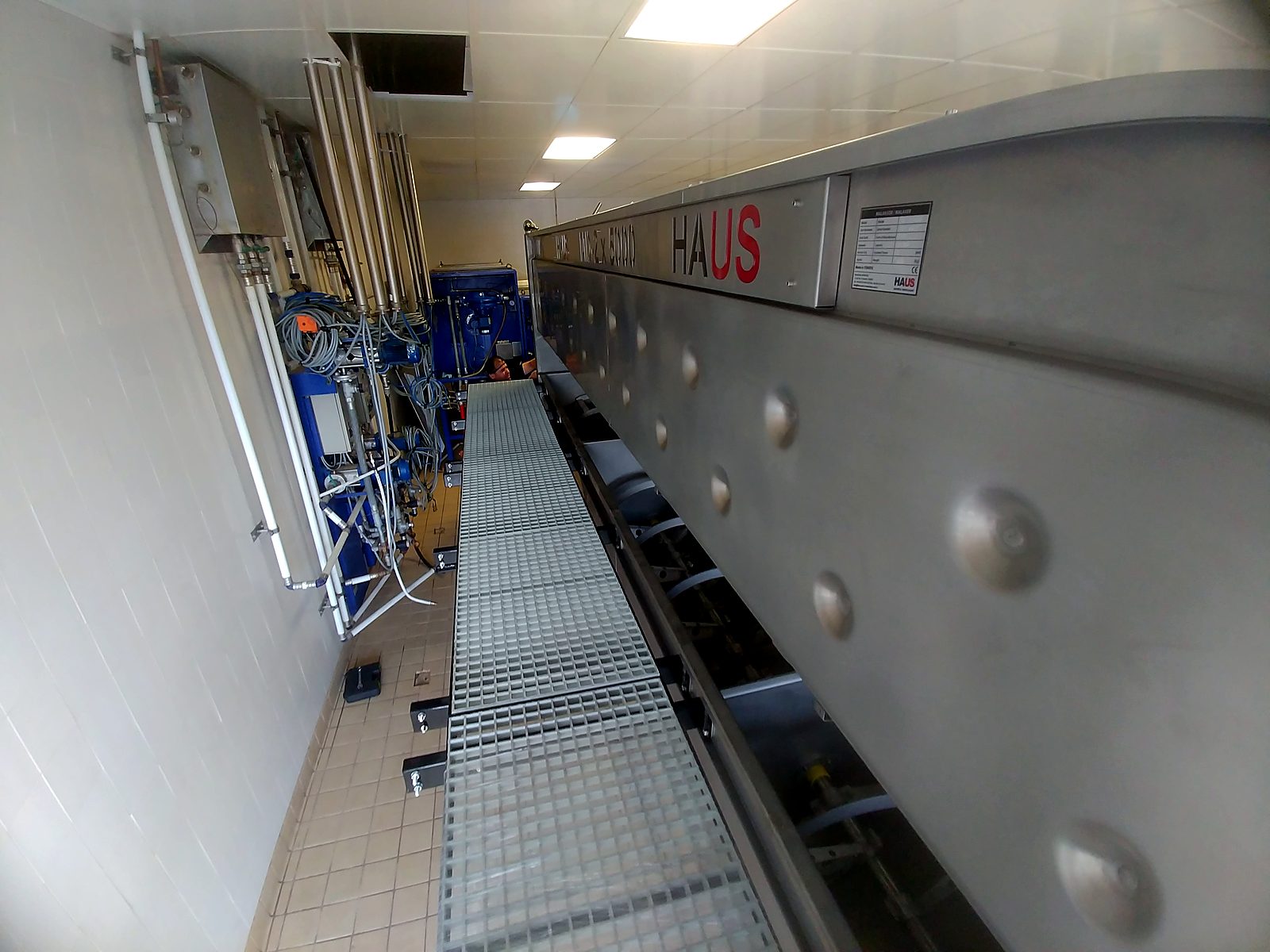
- MD-2X5000 malaxer with hot-water jackets
- Two DDV-5343 dual-drive decanter centrifuges
- Two VBA-5433 vertical separators
- Piston pumps for the new line, plus extra piston pumps to connect the existing crushers to the retained malaxer
- Preliminary design of the clean-olive silo and its conveyors, and the electrical panel for the silo conveyors and level sensors
- Commissioning, start-up and operator training
Since start-up Archer has supplied HAUS spare parts and support, including crusher screens, separator seal kits, pump stators and seals, decanter bearings and mounts, a replacement crusher motor and a new operator panel PC.
How the line works
Washing
A belt conveyor takes olives from the reception hopper to the washer, which removes leaves and twigs, washes the fruit and separates stones by density.
Clean-olive silo
A reversible screw conveyor spreads the washed olives across two sections of a silo with four hoppers, knife gates and vibrating feeders. High- and low-level switches start and stop the conveyors.
Crushing
Two hammer crushers with a rotor vane and fixed sieve turn the olives into paste. The variable-speed drive (1,500–3,600 rpm) lets the operator set paste quality.
Malaxing
Piston pumps move the paste to the malaxer, where it is kneaded at 20–35 °C for 15–45 minutes to release the oil.
Decanting
Speed-controlled mono pumps feed the two decanters. The scroll conveys the pomace out of the bowl, and the drive adjusts the differential speed to the solids load.
Polishing
Oil passes a 1 mm vibration screen and a resting tank to the self-cleaning disc-stack separators, which remove fine solids and discharge them at intervals. Clean oil is pumped to storage.
Equipment
| Line | HAUS OlivePlus 64, up to 10 t/h of olives |
|---|---|
| Washer | 20–25 t/h, air leaf removal, stone separation, 6,000 L water tank |
| Crusher | KS-45 double crusher, 8,000 kg/h each, 45 kW, AISI 304 |
| Malaxer | MD-2X5000, 9,000–10,000 kg, AISI 304, hot-water jackets |
| Paste pumps | 2 × HPP-4 piston pumps (15 t/h); 2 × H-100 mono pumps to the decanters |
| Decanters | 2 × DDV 5343 dual drive, 5,000–6,000 kg/h each, 532 mm duplex stainless bowl, up to 3,080 g |
| Vibration screens | 2 × V-1500, 1 mm openings |
| Separators | 2 × VBA 5433-P40, 1,250 L/h oil each, 6,800 rpm, self-cleaning |
| Oil and water pumps | 2 × H-44 oil pumps (1,600 L/h); 2 × H-84 black-water pumps (3,000 L/h) |
| Tanks and heating | 2 × HDT-11 resting tanks with CIP; 2 × 250 L oil basins; 2 × plate heat exchangers |
| Controls | 2 × PLC panels with 12-inch TFT touch screens |
Related: Olive Oil Extraction · HAUS · All case studies