
Georgia (USA) Olive Grower: Olive Oil Extraction Line Case Study
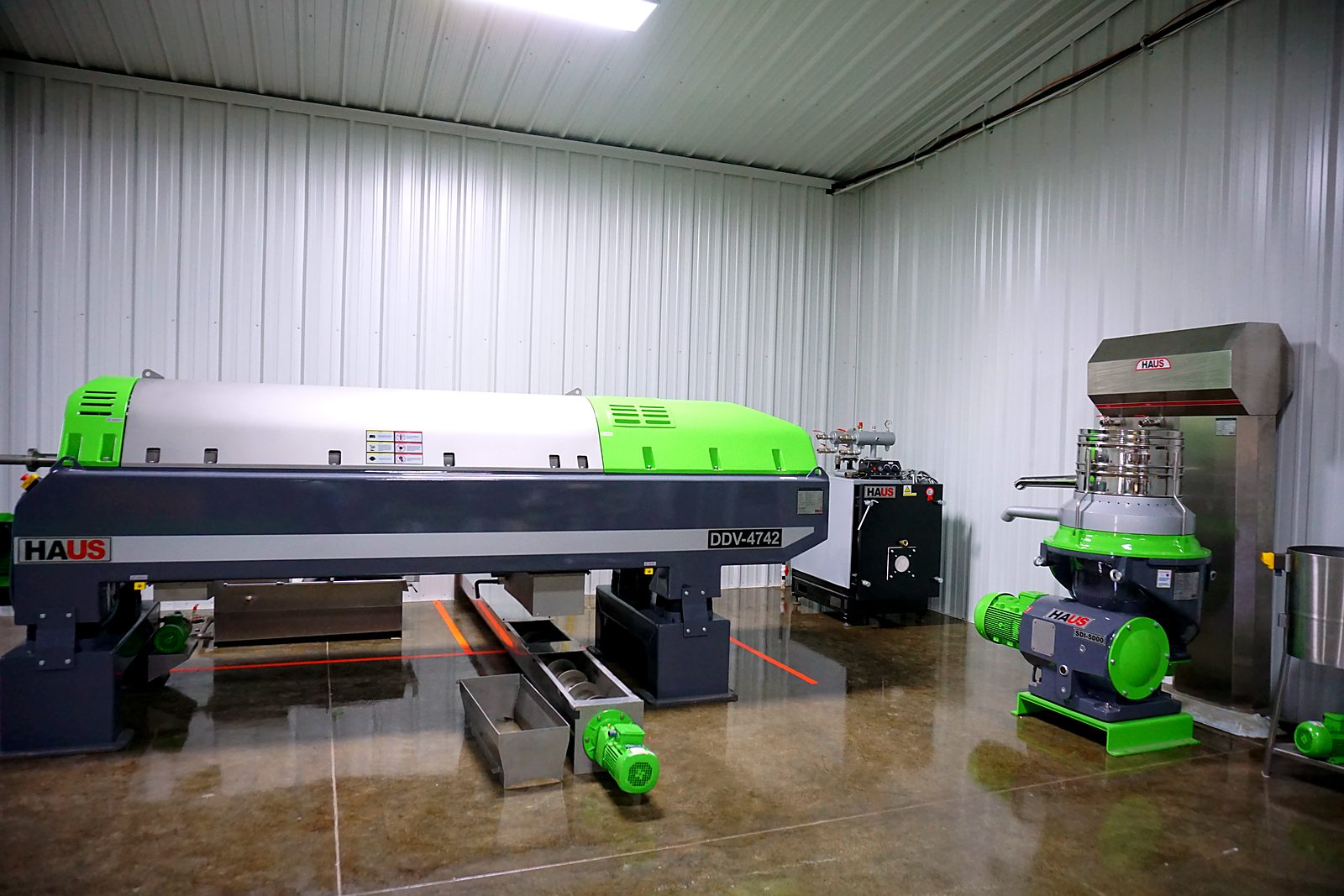
A complete HAUS olive oil extraction line of about 3 tonnes per hour, from olive cleaning to the final separator.
The application
Along with water treatment equipment, Archer Separation supplies complete HAUS olive processing lines, sized for any grower from boutique to industrial scale. For an olive grower in Georgia, USA, Archer supplied a HAUS OliveMax Pro+ 53 continuous extraction line, ordered in 2016.
The line is rated at 2,800–3,300 kg of olives per hour and handles the fruit in three stages: olive cleaning, paste kneading and processing. Archer’s capacity check for the decanter used Arbequina olives with an estimated oil content of 22 %.
The challenge
A grower milling its own fruit needs more than the extraction machines. The plant also needed warm water for the crusher, malaxer and separator, a gas supply to the boiler, oil transfer and stainless steel oil storage. The water installation scheme was issued with the line drawings.
Archer sized the boiler gas supply: for a 100,000 kcal/h (397,000 BTU/h) boiler, a 3/4-inch line on propane or a 1-inch line on natural gas. The same calculation checked the heat needed to warm olive paste from 10 °C to 27 °C, about 48,000 kcal/h at 3,000 kg/h.
What Archer supplied
- Complete HAUS olive oil extraction line
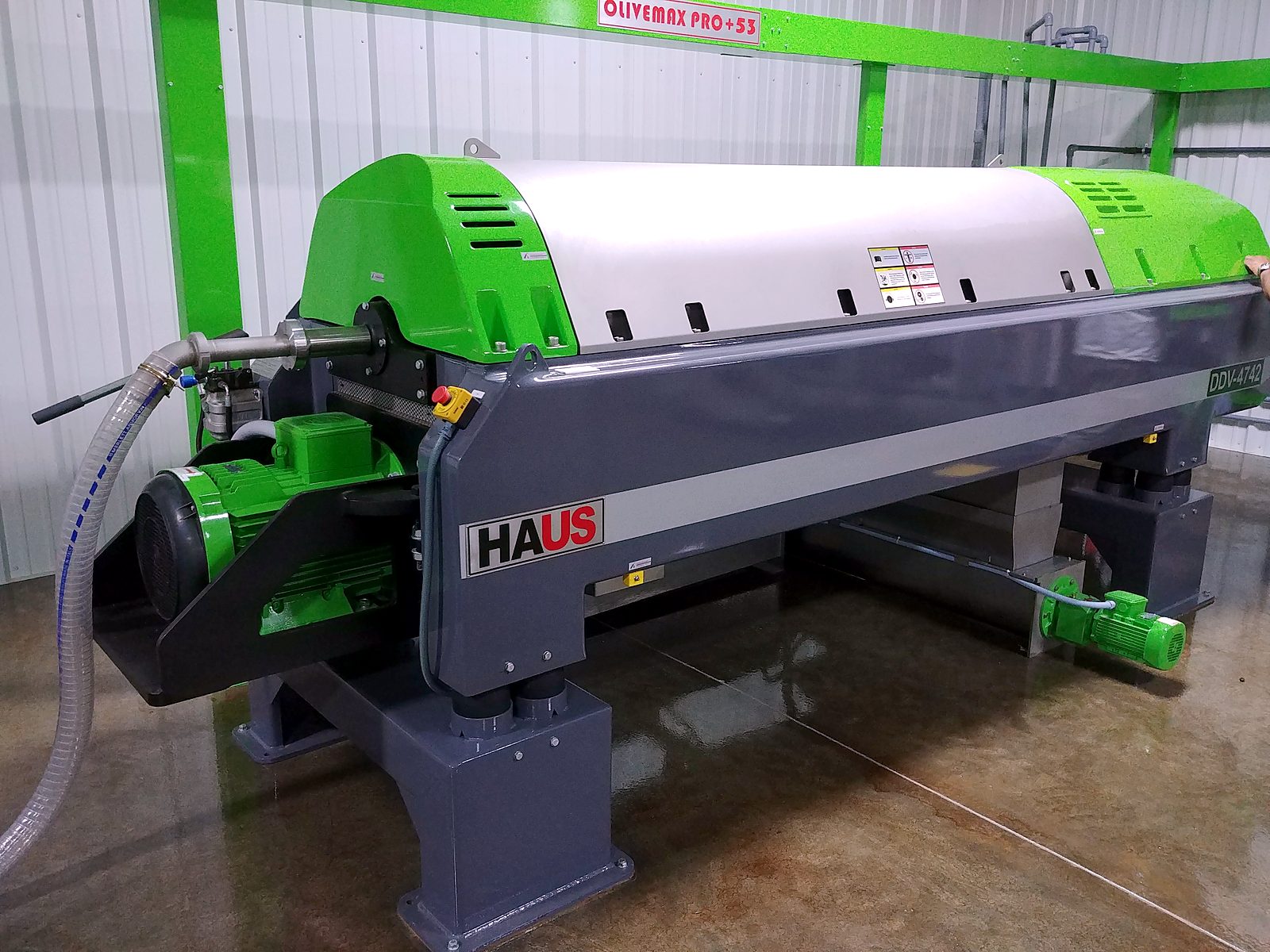
- DDV 4742 dual-drive decanter, with a back-drive motor to control the differential speed
- SDI 5000 self-cleaning vertical separator with inverter drive
- Heating group with boiler, heat exchanger and water-softening system
- Main PLC control panel, with separate panels for the washing and heating units
- Eight 5,000 L (1,320 US gal) AISI 304 stainless steel oil storage tanks
- Food-grade helical rotor pump and hoses for oil transfer
- Gas supply sizing for the boiler
- Commissioning, start-up and training
- Spare parts and consumables after start-up, such as antiscalant for the water-softening system
How the line works
Cleaning
Olives are fed into the hopper of the defoliator, where the leaves are removed, and then washed without damage to the pulp. An elevator lifts the clean olives to the crusher.
Crushing
A 37 kW stainless steel rotor-vane crusher with a fixed sieve turns the olives into paste.
Malaxing
The MS-7X750 malaxer kneads the paste in seven 750 kg sections at 30–35 °C for 30–45 minutes to release the oil.
Decanting
A mono pump with an AC speed drive feeds the paste to the decanter, which separates the oil from the pomace. A screw conveyor and piston pump take the pomace out of the plant.
Polishing
Oil passes the vibration screen, which removes small particles, and is pumped to the resting tank of the separator. The separator polishes the oil, which then collects in an oil tank with a pump for transfer to storage.
Heat and control
A natural gas boiler and heat exchanger supply warm water to the crusher, malaxer and separator. The line is run from PLC control panels.
Equipment by stage
| Olive cleaning | BKP-521 reception hopper and elevator; YY-51 olive washing machine; EK-351 crusher elevator |
|---|---|
| Paste kneading | KS-37 olive crusher (37 kW); MS-7X750 malaxer; H-60 mono pump |
| Processing | DDV-4742 decanter centrifuge; V-1200 vibration screen; H-44 oil pump; SDI-5000 vertical separator; PYK-2 oil tank with pump |
| Pomace | EPY-630 screw conveyor; HPP-1 piston pump |
| Heating | Boiler with natural gas burner; HET-26 heat exchanger; water-softening system |
| Oil storage | 8 × 5,000 L AISI 304 stainless steel tanks |
Related: Olive Oil Extraction · HAUS · All case studies