
Southern Alberta Municipal WWTP: Second Centrifuge Case Study
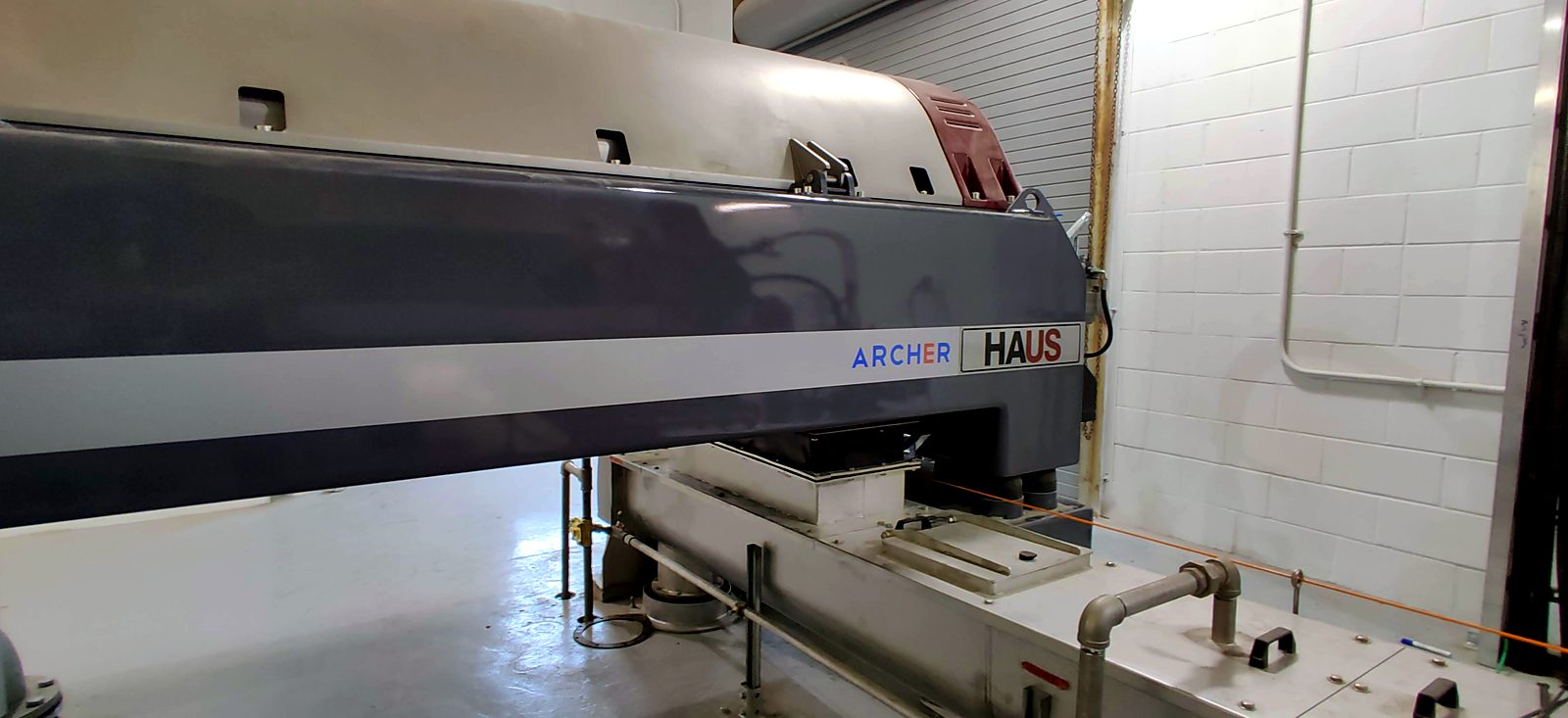
A HAUS DDE 4042 decanter centrifuge with an Archer control panel dewaters municipal sludge at a wastewater treatment plant in Southern Alberta.
The application
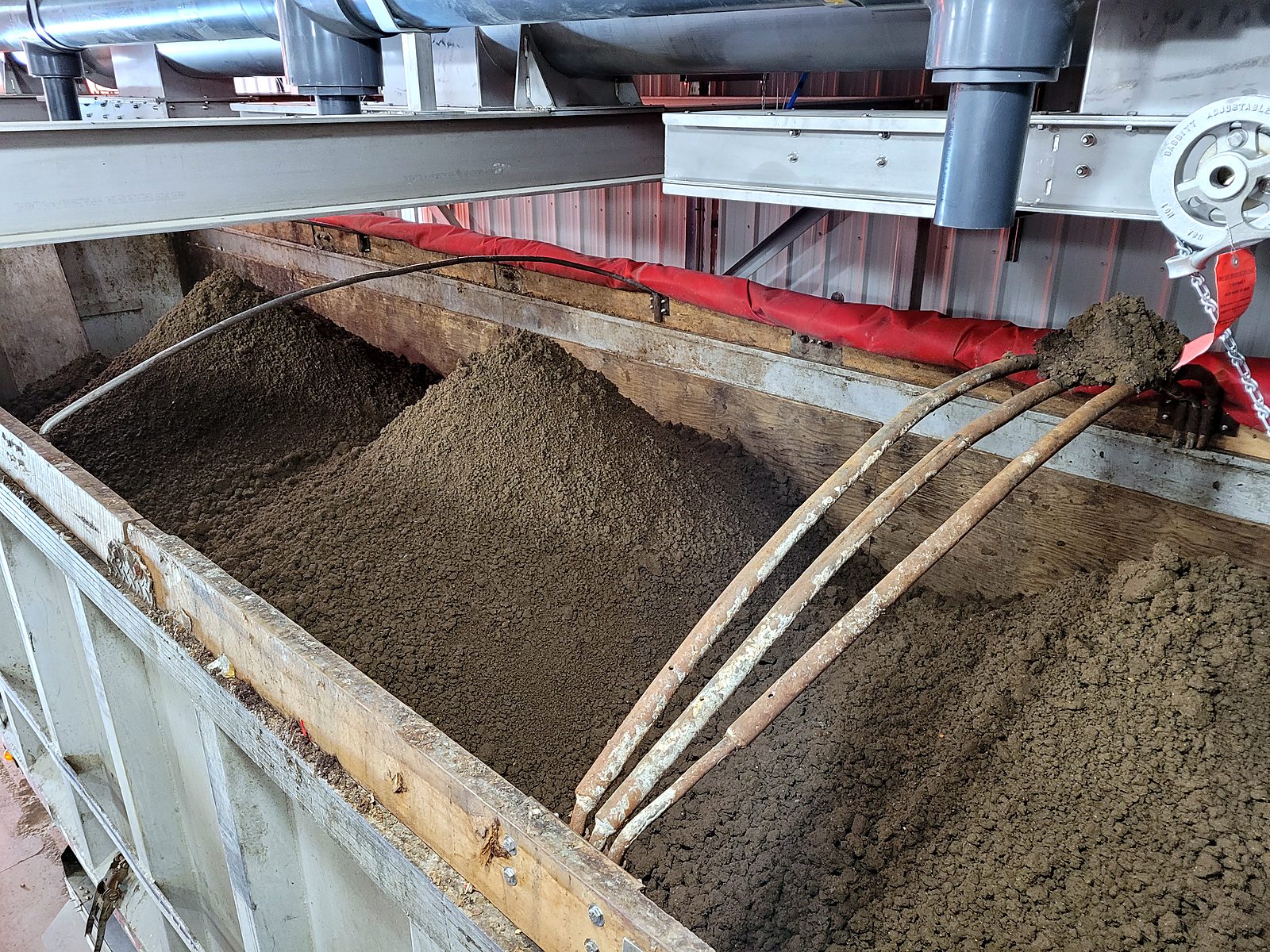
A municipal wastewater treatment plant in Southern Alberta added a second dewatering centrifuge for its blended primary and waste-activated sludge.
The plant runs a biological nutrient removal process. The centrifuge dewaters thickened waste-activated sludge blended with undigested primary sludge, typically at a 60:40 ratio, with 75 to 85 % volatile solids and about 3.7 % feed solids.
The challenge
The second centrifuge was part of the plant’s lifecycle upgrade. The owner wanted a machine designed for biological nutrient removal sludge, available on a short delivery, compatible with the plant’s existing 480 V, 60 Hz supply, and backed by the manufacturer for operating and maintenance support.
What Archer supplied
- HAUS DDE 4042 decanter centrifuge (Centrifuge No. 2)
- Archer control panel: a free-standing NEMA 12 panel with an Allen-Bradley CompactLogix PLC, a 7-inch PanelView colour touch screen and the variable frequency drives for the main and back-drive motors, CSA certified
- Kozegho PolySys CS 4200 dry-polymer make-down system
- Jar testing of the plant’s sludge to select the polymer
- Installation support, commissioning and performance testing
- Service visits and spare parts for the centrifuge and polymer system
How it works
Feed enters the bowl through a feed pipe and is accelerated to bowl speed. The solids settle on the bowl wall, and the scroll, turning slightly faster or slower than the bowl, carries them up the cone to the cake discharge. The separated water leaves over adjustable weirs at the other end of the bowl as centrate.
The dual drive lets the operator set bowl speed and scroll differential speed separately, and the weir plates set the pond depth, so cake dryness and centrate quality can be traded against each other. At commissioning the bowl ran at 3,600 rpm, about 2,900 G, with a differential speed of 1.2 to 1.5 rpm.
The CS 4200 system wets and matures dry polymer in a three-chamber polyethylene tank, with a stainless steel screw feeder and automatic concentration control. It makes up to 4,200 L/h at a 60-minute maturation time. Jar tests in January 2021 on the plant’s sludge at 3 % solids gave a starting cationic polymer dose of about 4.2 kg per dry tonne.
Results
The centrifuge was commissioned in March 2022, and the certificate of satisfactory performance was signed on 5 March 2022 after at least five business days of operation, the last 48 hours consecutive. The commissioning log shows:
- Feed of 16.2 to 18 m³/h at 3.1 to 3.2 % solids, or 0.50 to 0.56 tonnes of dry solids per hour
- Cake of 19.6 to 24.6 % dry solids, above 23 % once the settings were tuned
- Centrate of 380 to 486 mg/L suspended solids, about 99 % solids capture
- Polymer use of 4.3 to 5.2 kg per dry tonne, about half the 10 kg per dry tonne design figure
Design basis
| Feed | Blended primary and waste-activated sludge, 3.7 % solids |
|---|---|
| Flow | 17.5 m³/h |
| Cake | 23 % dry solids |
| Solids capture | 95 % minimum |
| Polymer | 10 kg/dry tonne |
Design figures from the equipment proposal and submittal; results from the commissioning log.
Equipment
| Centrifuge | HAUS DDE 4042, dual drive |
|---|---|
| Bowl | 400 mm, duplex stainless steel 2205, 15° cone, L/D 4.0 |
| Scroll | AISI 304 stainless steel, flame-sprayed tungsten carbide; tungsten carbide feed zone plate |
| Drives | 30 kW main motor, 7.5 kW back-drive |
| Gearbox | 3.15 kN·m nominal torque |
| Hydraulic capacity | 33 m³/h |
| Instruments | Vibration transmitter, Pt100 sensors on each main bearing |
| Polymer system | Kozegho PolySys CS 4200, up to 4,200 L/h |
Related: Decanter Centrifuges · Municipal Wastewater Treatment · All case studies