
Plastic Recycling and PVC Dewatering with Decanter Centrifuges
Decanter centrifuge systems let you take part in sustainable recycling while turning plastic waste into a source of profit.
On average, every person in the world produces nearly 30 kg of plastic waste a year, and in some developed countries it reaches half a kilogram per person per day. Archer Separation supplies decanter centrifuges, tools and expertise that recover waste plastics and microplastics from your process water, so you recycle sustainably and make a profit from what you separate.
Generic flowsheet for illustration. Every Archer system is designed to its own basis; ask us for one drawn for your plant.
Why plastic recycling needs mechanical separation
Recycling is more complex than it looks. Plastic goods often contain metals among their plastics, and ABS, PVC and PET are only a few of the many plastic types that have to be separated and processed. Seemingly simple items such as toys, diapers, packaging, carpet and clothing are hard to recycle. Soft goods in particular often combine polyamide (PA) fibres with polypropylene (PP) binders, sometimes with other plastics too.
Separating and recovering plastic without mechanical separation systems is all but impossible. It is well worth installing one: clothing is the most commonly discarded good outside traditional recycling streams, and polyester and nylon fabrics are the most valuable part of most plastic waste. Recovering polyamide and polyethylene fibres from waste streams and water earns the most while eliminating one of the most common forms of wasted plastic. Plastic is durable and reusable, and we believe in getting the most out of it; we bring our decades of experience with decanter centrifuge systems to your process.
Applications of a Decanter Centrifuge in Plastic Recycling and Dewatering Systems
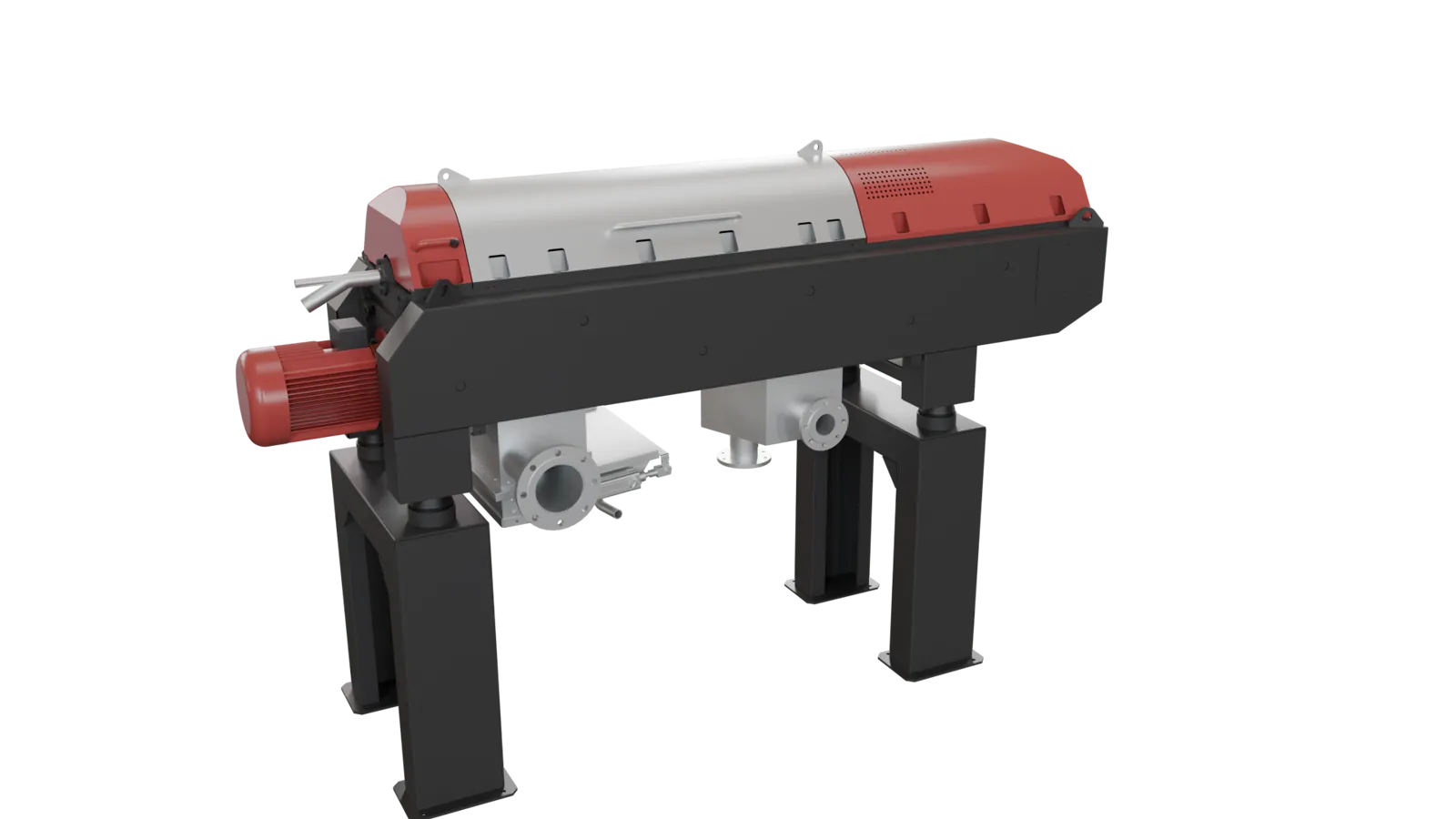
All-in-one cleaning, separation and dewatering
Plastic waste arrives in many sizes, densities and materials, and sorting small pieces into the right fractions is not a job for hand sorting. A decanter can be fitted with tools that increase settling or select particular sizes, so pieces are sorted by size and density automatically within the existing rinsing and dewatering system.
A decanter also loses the least usable product of any dedicated plastic dewatering system. One continuously running machine with a small footprint replaces several separate cleaning and separation systems, saving time, space and cost.
Easy testing, installation and upkeep
We have decades of experience tuning and optimizing decanters. Our partner HAUS offers a mobile centrifuge kit no larger than a small shipping container, and Archer runs its own containerized centrifuge units. A mobile test unit settles the exact specification on your own process, removing guesswork and set-up problems. It can run on its own long-term, or as a pilot for a larger plant if you expand, and it lets us adjust and troubleshoot your decanter remotely.
Improved product purity
Besides cleaning the water, a decanter improves the plastic itself. Modern decanter technology, tools and components remove dirt, debris and contaminants from the separated plastic, so more of the valuable plastic is captured and both equipment and product stay cleaner. Cleaner product is cheaper to work with and worth more when sold on: the economics are crystal clear, or perhaps plastic clear.
Petrochemical industry value
The petrochemical industry is among the world’s largest manufacturing industries, with a market of more than USD 600 billion, so recovering and reusing its products matters as much as making them. Cost savings have an outsized effect there, and the decanter is one of its key cost-saving technologies: it recovers plastic solids and removes water from the plastic to be recycled. Less residual water means lower thermal drying costs afterwards, which makes recycling more efficient.
Treatment of microplastic-rich water
Removing and preventing microplastics in water is an ongoing concern; a litre of bottled water can contain hundreds of thousands of tiny plastic particles. A decanter separates solids from water by G-force rather than by screens, so even tiny particles such as microplastics settle out. The water stays reusable, and the plastic ends up where it belongs, agglomerated with other plastic for reuse, at the scale of a single facility or a full treatment system.
Sorting by density: a typical wash line
Shred
Mixed plastic waste is cut into flakes, typically around 10–20 mm.
Wash
Friction washers strip labels, glue, dirt and other attached contaminants.
Separate
The flake slurry goes to a decanter: in water, lighter plastics float and heavier ones settle, so two fractions leave separately and dewatered.
Dry and reuse
Low-moisture flake goes on to drying or extrusion, and the wash water is clarified and reused.
| Typically float in water | Polypropylene (PP), polyethylene (PE, LDPE and HDPE) |
|---|---|
| Typically sink in water | PET, PVC, ABS, polyamide, polycarbonate, PS |
| Typical feeds | Packaging films, PE/PP bottles and caps, PET bottles, cable insulation, carpet fibre |
Typical densities; fillers, foams and blends shift them, and a separation liquid other than water can move the cut point. We confirm the split with trials on your material.
What a decanter brings to a plastics line
- Cleaning, size and density sorting, and dewatering in one machine
- Lowest loss of usable product
- Cleaner plastic that is worth more
- Drier product and lower thermal drying cost
- Microplastics recovered from the wash water
- Mobile units for trials on your own material
Archer Separation supplies these tools and the industry experience to build a plastic recycling system that suits your facility. A decanter centrifuge is the industry-leading way to recover recyclable plastic for both ecological and economic benefit, keeping waterways and water systems clean while maximizing the yield of recyclable plastics in an industry increasingly focused on reuse.
We understand your plastic recycling and dewatering needs, and will meet those needs with the best technology available.
Related pages
Decanter centrifuges
How decanters separate solids from liquids continuously.
Containerized systems
Complete centrifuge plants in a shipping container, to buy or rent.
Polymer systems
Polymer make-down for better capture of fines.
DAF systems
Clarifying wash water for reuse or discharge.
Screw conveyors
Moving dewatered solids away from the decanter.
Engineering solutions
Process design for difficult separation problems.
Contact us today with all your separation or dewatering challenges. Call 604.484.4516 or use our online form.